

Losses when exerting effort
Leaking urine when coughing, hop, run or lift weights.
Individual care to understand pelvic floor symptoms and regain confidence in your daily life.
At Dinàmic Salut we accompany women with urine leaks, pelvic pain, discomfort during sexual relations or difficulties after childbirth, among other reasons for consultation. The assessment allows you to design a plan that may include exercise, education, habit guidelines and other techniques depending on what you need.

It is the area of physiotherapy that assesses the function of the pelvic floor and its relationship with the bladder., the intestine, the pelvis and daily activity. May help address continence issues, prolapse symptoms and some forms of pelvic pain or during penetration.
Attention begins by listening to what happens to you, since when and how it influences your life. Treatment is not always about strengthening. In some people, muscle contraction and resistance are worked on.; in others, learn to relax, coordinating or managing pain is more important.
Physical therapy may be part of pregnancy and postpartum care or coordinated with gynecology, urology, midwives and other professionals when the problem requires it. It is not a substitute for medical diagnosis or treatment of an infection or other illness..
You don't need to wait until an discomfort is intense to talk about it..
Leaking urine when coughing, hop, run or lift weights.
Sudden urge to urinate or need to go to the bathroom very frequently.
Vaginal pressure or lump that requires evaluation for prolapse.
Discomfort in the perineum or pelvis that affects rest or activity.
Pain with penetration or discomfort that makes intimacy difficult.
Questions about continence, scars, abdomen or return to exercise.
Difficulty controlling gas or stool, or problems with evacuation.
Symptoms that appear or change during pregnancy or menopause.
The same symptoms can have different causes. The consultation adapts to your history and your preferences.
The choice depends on the findings. No technique is routinely applied to everyone..
Understand how it works and what factors influence your symptoms.
Supervised contraction and resistance exercises when indicated.
Work to learn to release and control the muscles in cases of pain or tension.
Adapted urination guidelines, evacuation and daily activities.
A resource that can help recognize muscle activity if useful.
Techniques that can be assessed for pain, tenderness or scars.
Progression adapted to pregnancy, postpartum or return to activity.
Review of symptoms and goals to adjust the plan during the process.
You can explain your doubts and decide which part of the examination you want to carry out..
We ask about habits, background and situations that concern you.
We agree on what you want to improve and what aspects most influence your life..
We can explore posture, breathing, abdomen and movement depending on the case.
If an internal examination can provide information, is proposed and is only carried out with your consent.
First steps and how to review progress are indicated..
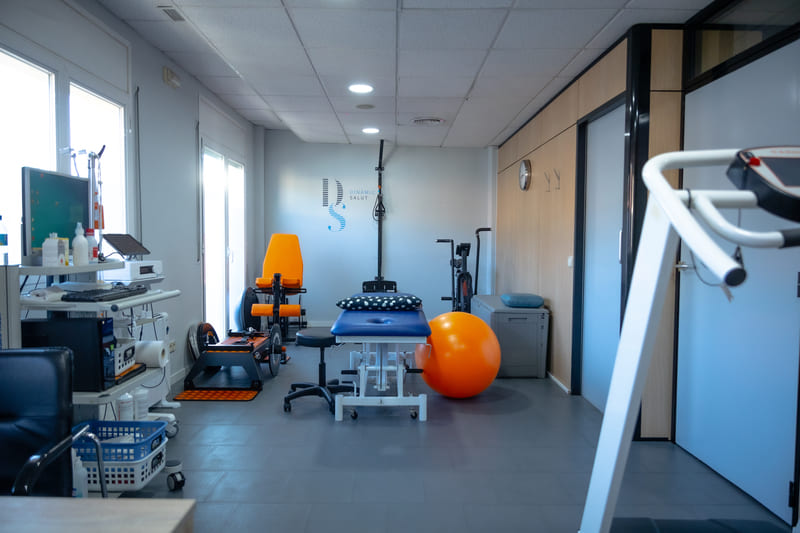
The interview and external assessment can provide important information. In some cases, a vaginal or rectal examination is offered to better understand muscle function., pain or tenderness. Before it is explained what it consists of, What is it for and what alternatives are there?.
Internal scanning requires your consent, you can reject it or ask it to stop at any time. After, the plan adapts to your objectives and, if required, coordinates with other health professionals.
Work on losses or urgency according to their cause.
Reduce the impact of discomfort in daily life.
Improve strength, relaxation or coordination when appropriate.
Resume exercise with a progression adjusted to your symptoms.
Understand the problem and know what you can do between visits.
Have adapted tools to continue taking care of yourself.
The difference helps guide the assessment and the first strategies.
Clear answers before the first visit.
It can happen, but it is not advisable to assume that you must live with losses. An assessment allows you to identify the type of incontinence and propose an appropriate plan..
Not necessarily. First, an interview is carried out and the assessment is explained. If an internal examination is useful, It is offered with prior information and is only done if you give your consent.
Yeah. You can accept it, reject or stop it at any time. The professional will explain to you what information they provide and how to continue according to your decision..
No. A contraction exercise can be useful in some cases, but if there is pain, difficulty relaxing or coordination problems, the plan may be different. First evaluate the function.
It varies between people. Supervised training is usually planned for several months and is adjusted to the evolution; You cannot promise a result after a single session.
Yeah, An assessment adapted to the pregnancy and the indications of the team carrying out the pregnancy can be carried out.. The plan will depend on your symptoms and history.
Physiotherapy can assess the muscle and sensitivity component and propose adapted measures.. Pain can also have other causes; we proceed, a gynecological evaluation is recommended.
Fever, blood in urine, severe pain or symptoms of infection require medical evaluation. It is also worth checking if the symptoms appear suddenly or worsen clearly..
We will help you understand your symptoms and define a urogynecological physiotherapy plan adapted to you..
Ask for a date